

13 min read
Family Law
Most LGBTQ+ parents who used assisted reproduction to grow their families assume that once both names are on the birth certificate, their parental rights are settled. The hospital recognized them, the state issued the document, and that's supposed to be the end of it. Then they take a vacation to a state with hostile parentage laws, encounter a medical emergency, or face a relocation for work — and suddenly the non-biological parent is being told they need court documentation to prove they're a parent at all. The piece of paper everyone treated as definitive turns out to mean a lot less than it looked like.
That's the gap Colorado's confirmatory adoption statute — known as Marlo's Law — was designed to close. It's not a traditional adoption in the sense most people understand the word, and it's not just paperwork either. It's a streamlined court process specifically built for parents who conceived through assisted reproductive technology, designed to give them a formal adoption decree that's recognized in every state under the Constitution's Full Faith and Credit Clause. Whether you're an LGBTQ+ couple, an unmarried partner, or a parent who used a sperm or egg donor, understanding how Marlo's Law actually works — and why it might matter for your family — is something most Colorado parents wish they'd learned earlier rather than later.

What Is a Confirmatory Adoption Under Marlo's Law?
A confirmatory adoption is a streamlined Colorado court process that allows a non-biological parent or non-birth parent to formally adopt their own child when that child was conceived through assisted reproductive technology. The process is codified at C.R.S. § 19-5-203.5 and was created by House Bill 22-1153, which became effective in August 2022. The statute is officially titled "Marlo's Law," named after Marlo — the daughter of former Colorado House Majority Leader Daneya Esgar and her wife Heather Palm — whose family's experience navigating Colorado's old adoption rules helped drive the legislation.
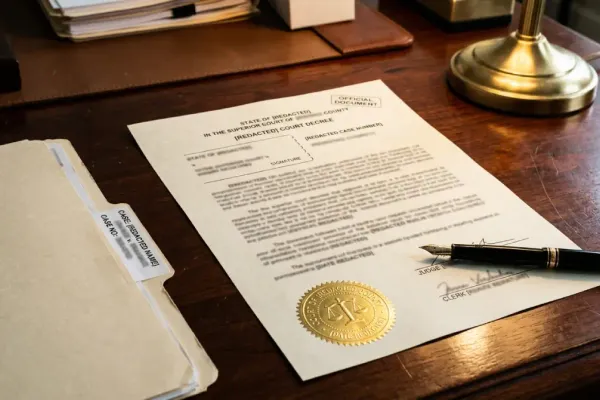
The "confirmatory" part of the name reflects what the process actually does. It doesn't establish parental rights for the first time — those rights already exist under Colorado parentage law for parents who used ART together, are listed on the birth certificate, or qualify as presumed parents under C.R.S. § 19-4-105. Instead, the confirmatory adoption produces a court decree that confirms the parent-child relationship in a form that travels across state lines. Under the Full Faith and Credit Clause of the U.S. Constitution, a court adoption decree from Colorado must be recognized by every other state, regardless of that state's own parentage laws.
What makes Marlo's Law remarkable is what it eliminates from the traditional adoption process. There's no home study requirement. No criminal background check. No fingerprinting. No required in-court appearance. No minimum residency period. No notice to or consent from a sperm, egg, or embryo donor. The petitioners don't even have to be Colorado residents — as long as the child was conceived or born in Colorado, jurisdiction is appropriate. The whole framework is designed to give families who already have legal parental rights under Colorado law a cost-effective, dignified way to secure those rights everywhere.
Why Confirmatory Adoptions Matter for Colorado Families
For most Colorado parents who built their families through ART, life feels secure within the state. Birth certificates list both parents, schools and pediatricians treat both parents equally, and Colorado's parentage laws recognize the family unit. The problem is that not every state operates the same way, and parental rights that depend on a birth certificate alone are far less portable than most parents realize.
Here's why this matters practically for Colorado families:
Interstate travel and relocation
– A Colorado birth certificate listing both parents may not be enough in states with hostile parentage laws. A court adoption decree, by contrast, is entitled to full faith and credit nationwide, meaning it must be recognized in every state regardless of that state's own laws about same-sex parentage or assisted reproduction
Medical emergencies
– When a child needs medical care and the biological parent isn't available, a non-biological parent without a court decree may face questions about their authority to consent to treatment. A confirmatory adoption decree eliminates that ambiguity in any hospital, in any state
Death or incapacity of the biological parent
– If the biological or birth parent dies or becomes incapacitated, the non-biological parent's standing can be challenged by extended family members, particularly in states that don't recognize ART-based parentage. A confirmatory adoption decree forecloses those challenges
Federal benefits and immigration
– Social Security survivor benefits, immigration sponsorship, and certain federal protections rely on legally-recognized parent-child relationships. A confirmatory adoption decree provides documentation that federal agencies and other countries treat as definitive
School, custody, and government interactions
– Anywhere a parent needs to prove their relationship to their child — enrolling in school, traveling internationally, applying for passports, dealing with government agencies — a court adoption decree carries weight that a birth certificate alone sometimes doesn't
The common thread across all of these scenarios is that parental rights are most valuable when they can't be questioned. Marlo's Law gives Colorado families a streamlined path to that level of certainty.
When You Should Consider a Confirmatory Adoption
Not every family who used ART needs to pursue a confirmatory adoption immediately, and the statute doesn't require it. But for many families, the decision to file is less about whether the protection is needed and more about when it makes sense to secure it. Knowing when the process becomes worth pursuing helps families plan rather than react.
You're an LGBTQ+ couple who used ART to conceive. Same-sex couples — married or unmarried — who used assisted reproductive technology to have a child are among the families Marlo's Law was specifically designed to protect. Even if both parents are on the birth certificate and Colorado recognizes the family fully, a confirmatory adoption decree provides nationwide recognition that doesn't depend on where the family travels or relocates.
You used a known or unknown donor. Whether the sperm, egg, or embryo came from an anonymous donor or a known donor, the confirmatory adoption process forecloses any future claim by the donor and confirms that the non-genetic parent has full legal parental rights. The statute specifically eliminates the requirement to provide notice to or obtain consent from the donor.
You're an unmarried couple who conceived through ART. Marlo's Law specifically applies regardless of marital status. Unmarried partners — heterosexual or LGBTQ+ — who used assisted reproduction can both file as petitioners and obtain a confirmatory adoption decree without first needing to marry.
You completed a surrogacy arrangement in another state. The statute also covers situations where married parents engaging in surrogacy in another state ended up with a court order establishing only one spouse as the parent. Marlo's Law allows the other spouse to confirm parentage through Colorado's streamlined process.
You're planning to relocate, travel internationally, or simply want certainty. Many Colorado families pursue confirmatory adoption not because of an immediate legal threat but because they want the peace of mind that comes with portable, court-issued documentation. For families considering a move to a less-protective state or significant international travel, the timing often makes sense before those plans solidify.
What a Confirmatory Adoption Doesn't Do — And Where Its Limits Matter
Marlo's Law is a significant piece of legislation, but it's not a universal solution to every parentage question. Understanding what the confirmatory adoption process can and can't accomplish helps families decide whether it fits their situation — or whether a different legal pathway might serve them better.
Limitations worth understanding include:
It only applies to children conceived through assisted reproduction
– If a child was conceived through sexual intercourse, the confirmatory adoption statute doesn't apply, and parents looking to establish or confirm a non-biological parent's rights need to use other adoption pathways like second-parent or stepparent adoption
It doesn't override out-of-state laws on its own
– While a Colorado adoption decree must be recognized in every state under full faith and credit, certain rights tied to ongoing residence (like state-specific benefits) may still depend on the laws of the state where the family lives
The child's consent is required if over 12
– Children twelve years of age or older must consent to the confirmatory adoption. While this is rarely an issue in practice for parents who've raised the child since birth, it's a requirement worth understanding for older children
Both parents must join the petition
– Marlo's Law requires both parents to participate as petitioners in the adoption. It's not a process one parent can pursue unilaterally if the other parent is unwilling or unavailable
It doesn't address all parentage situations
– Families with complex parentage histories — including prior court orders from other states, contested parentage claims, or unusual donor arrangements — sometimes need a more involved process than Marlo's Law contemplates
Confirmatory Adoption vs. Other Colorado Adoption Pathways
Marlo's Law isn't the only way to establish or strengthen parental rights in Colorado. The state offers several adoption pathways, each designed for a different family situation, and choosing the right one matters because the wrong process can mean unnecessary cost, delay, or invasive requirements.
How they generally compare:
Confirmatory adoption (Marlo's Law) – The streamlined option for parents who already have legal or presumed parentage and whose child was born through assisted reproduction. No home study, background check, or court appearance required. The fastest and least invasive pathway when the family qualifies
Second parent adoption – Available when a child has one sole legal parent and a second adult wants to adopt without the first parent losing rights. Used in non-ART contexts where Marlo's Law doesn't apply. Requires home study and background checks
Relinquishment – Used when one or both biological parents voluntarily give up their parental rights so the child can be freed for adoption. Includes mandatory relinquishment counseling and requires court approval before the adoption can proceed
Stepparent adoption – Available to a married spouse or civil union partner of a child's legal parent. Used when families form through marriage or civil union after the child is born. Requires consent from any other legal parent and includes home study requirements
Kinship/relative adoption – Available to grandparents, siblings, aunts, uncles, and first cousins under specific circumstances when the biological parents have abandoned the child or failed to provide support. A different statutory framework with its own requirements
Agency or private adoption – Used when adopting a child who isn't already in the family unit. Involves the most extensive process — home studies, background checks, and often agency involvement
For most Colorado families who used ART to conceive, the confirmatory adoption pathway is the right starting point. The other adoption types come into play when the family situation falls outside Marlo's Law's specific scope.
How Colorado Courts Process Confirmatory Adoptions
Colorado courts have adapted to Marlo's Law in ways that reflect the legislature's intent that the process be streamlined and accessible. Understanding what the court actually requires — and what's been intentionally stripped out — helps families plan realistically rather than expecting the process to look like a traditional adoption.
What Colorado courts require for confirmatory adoptions:
A complete petition
– Both parents must join as petitioners, and the petition must include the child's birth certificate, the parents' marriage or civil union certificate if applicable, and identifying information about the child and parents
Documentation of assisted reproduction
– The petition must establish that the child was conceived through ART. This is typically straightforward and doesn't require detailed medical records, just confirmation that ART was used
Consent from a child age 12 or older
– If the child is twelve or older, they must consent to the adoption. The petition itself, signed by both petitioners, serves as the petitioners' written consent
Proper jurisdiction
– The petition can be filed in the county where the child was conceived or born, in the county where either petitioner lives, or in any Colorado county the petitioners choose if the child was conceived or born in Colorado. The petitioners don't need to be Colorado residents if the conception or birth happened in Colorado
A filing fee
– Standard adoption filing fees apply, though courts may waive them for petitioners who demonstrate financial hardship
What courts will not require under Marlo's Law: a home study, criminal background checks, fingerprinting, in-court appearances (in most cases), notice to or consent from a donor, or verification that the child is registered with the federal missing children's register. These traditional adoption hurdles are intentionally eliminated by the statute.

What to Do If You're Considering a Confirmatory Adoption
For Colorado families thinking about whether Marlo's Law makes sense for them, the decision usually comes down to weighing the cost and effort of the process against the long-term security a court decree provides. The good news is that the process itself is dramatically simpler than traditional adoption, and most families find it manageable with the right legal guidance.
First, gather the documents you'll need before filing: the child's birth certificate, the parents' marriage or civil union certificate (if applicable), and basic information about how the child was conceived through ART. Second, evaluate whether the timing works for your family's broader plans — many families pursue confirmatory adoption before significant travel, before relocating to a less-protective state, or simply when they have the bandwidth to handle the paperwork. Third, work with a Colorado family law attorney who has handled confirmatory adoptions specifically, because while the statute is streamlined, the petition still has technical requirements and choosing the right county and presenting the petition correctly affects how quickly the court issues the decree. The process is intentionally more accessible than traditional adoption, and pairing the statutory simplicity with experienced legal preparation typically produces a decree on a manageable timeline.
Get Colorado Family Law Help With Your Confirmatory Adoption
Marlo's Law is one of the most family-friendly pieces of legislation Colorado has passed in recent years, but the process still benefits from experienced legal preparation. A well-prepared confirmatory adoption petition moves smoothly through the court system and produces a decree that protects your family for the rest of your child's life. A poorly prepared one can cause delays, requests for additional documentation, or in some cases the loss of the streamlined treatment the statute provides.
The Reputation Law Group represents Colorado families navigating confirmatory adoptions, second-parent adoptions, stepparent adoptions, and the broader landscape of parentage and family formation issues — including LGBTQ+ couples, families built through assisted reproduction, and families facing relocation or interstate complications. If you're considering a confirmatory adoption under Marlo's Law, or if you're not sure which adoption pathway fits your family's situation, contact the Reputation Law Group today for a confidential consultation.