

19 min read
Divorce
What's Really at Stake When a Marriage Divides Its Property
You spent years building something: a home, a retirement account, maybe a business, a cushion that finally felt like security. Now a divorce is asking who gets which piece of it, and the worry about losing what you built can crowd out everything else. That's usually the moment people start looking for a property division attorney. It's worth knowing early that the split decides more than the next few months. It sets the financial floor you'll stand on for years.
The Split You Expect Versus the One You Get
Most people carry a version of property division into the process that isn't the one they get. Some assume everything will be split straight down the middle. Others believe that if their name is on a title or an account, that asset is protected. Neither assumption holds up in Colorado.
Here's the gap that trips people up. The rules aren't intuitive, and by the time you realize your assumptions were off, you may already be negotiating from a position that doesn't reflect what you're actually entitled to. Most people walking into this carry the same questions, even if they haven't said them out loud yet:
What counts as mine and what counts as ours?
Can I keep the house, or will I have to sell it?
What happens to the retirement savings I've built for twenty years?
Is my spouse hiding money, and how would I even know?
Do I need a property division attorney, or can we figure this out ourselves?

Why the Numbers Outlast the Divorce
Parenting time can be modified when circumstances change. Property division, in most cases, can't. Once a court approves the terms, the split is final. You don't get to come back two years later and argue that you undervalued the house or didn't realize how much of your retirement you were giving up.
A parenting plan can shift as children grow and lives rearrange themselves. The financial terms of a divorce are built to hold. Colorado courts revisit property division only in narrow circumstances, and feeling like you got a bad deal isn't one of them.
The Bottom Line: the property terms you agree to now are the ones you'll live with for years, which is why getting them right matters more than getting them done quickly, even when everything in you wants this finished.
What a Property Division Attorney Actually Does
The term gets used broadly, and most people aren't sure what it actually means in practice. A property division attorney isn't just someone who shows up at the end to split things. The bulk of the work happens well before anyone sits down at a table, and it's the kind of work that's easy to undervalue until you see what happens without it.
More Than Drawing a Line Down the Middle
Most of what a property division attorney does isn't what people picture. It's not one conversation about who gets what. It's a sequence of distinct tasks, each one building on the last:
Inventorying every asset and debt, including the ones that are easy to overlook
Characterizing each item as marital or separate property
Valuing assets accurately, often with appraisers or financial experts
Negotiating terms that reflect the full picture, not just the obvious pieces
Drafting language specific enough to hold up and be enforced
Enforcing the agreement if your spouse doesn't follow through
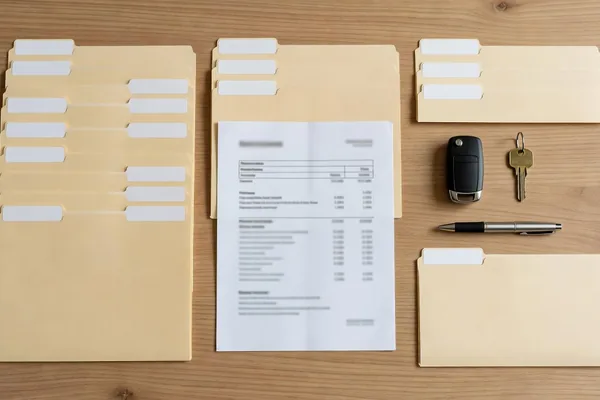
Think of it this way: a property division attorney's job isn't to argue over your furniture, it's to make sure the financial structure of your next chapter rests on numbers that are honest and terms that actually work.
The Work That Happens Before Anyone Negotiates
Most of the real value shows up before negotiations even start. Both spouses are required to lay out their full financial picture, and the accuracy of that picture shapes everything that follows.
That's where a sworn financial statement in Colorado comes in. It puts each side's income, expenses, assets, and debts on the record under oath. An attorney's job at this stage is to read what your spouse disclosed, flag what looks incomplete or inconsistent, and make sure your own disclosures are thorough enough to protect you later. Valuation happens here too: real numbers on the house, the retirement accounts, and any business interest, rather than rough estimates that tend to favor whoever benefits from being vague.
How Colorado Divides Property in a Divorce
Property division in Colorado doesn't follow a simple formula. The process has its own logic, and it's one that surprises people who assume the law works the way it sounds like it should. Understanding how Colorado actually handles property division makes it easier to recognize whether a proposed split is fair or whether something important is being missed.
Equitable, Not Equal
Colorado is an equitable distribution state, which means the court aims for a division that's fair given the circumstances of the marriage. Fair and equal aren't the same thing, and they don't have to look alike. A couple where one spouse earned significantly more, or where one spouse stayed home to raise children while the other built a career, may end up with a split that looks uneven on paper but reflects what each person contributed and what each person needs going forward.
This is where assumptions tend to cost people. Many hear "equitable" and round it up to "equal," or they hear "fair" and assume it means they'll get what they feel they deserve. Courts don't work from either starting point. They look at the full financial picture of the marriage, weigh a set of specific factors, and arrive at a division that accounts for reality rather than expectation.
Marital Versus Separate Property
Marital property includes most things acquired during the marriage, regardless of whose name is on the account or title. Separate property is what you brought in before the marriage, along with gifts and inheritances you received individually during it. In theory, separate property stays yours. In practice, the line blurs more easily than people expect.
Here's the catch. Growth counts. An investment account you opened five years before the wedding may be yours, but the increase in its value during the marriage can be treated as marital. The same goes for a house you owned beforehand that climbed in value while both of you lived in it, paid it down, and kept it up. Money that got mixed into joint accounts can lose its separate character altogether.
Keep In Mind: separate property doesn't stay separate just because you remember it that way, it stays separate because you can show where it came from and how it grew, and the longer a marriage lasts, the harder that gets.
The Factors Courts Actually Weigh
Colorado courts don't just look at who earned more. They weigh a set of factors that together describe the marriage's financial life:
Each spouse's contribution to marital property, including homemaking
Each spouse's economic circumstances when the property is divided
The value of the separate property each spouse is keeping
Increases or decreases in separate property during the marriage
Whether the family home should go to the parent with the children
Not every factor matters the same amount in every case. A marriage where both spouses worked full time with no children looks different from one where a spouse left a career to raise a family. Part of a property division attorney's work is making sure the factors that matter most in your situation get real attention rather than getting glossed over in a rush to settle.
If you're facing property division in a Colorado divorce and want to know which of these factors will shape your case, The Reputation Law Group can help. Reach out to schedule a consultation, and we'll help you understand what you're working with before any decisions are made.
The Assets That Make Property Division Complicated
Some divorces involve straightforward finances, a shared bank account, a car or two, a modest amount of retirement savings. Others don't. When a marriage has accumulated complex or high-value assets, the division process gets harder in ways that aren't always obvious at the outset. These are the cases where a high-asset divorce requires focused legal work, because the cost of getting a number wrong on any single asset can dwarf the cost of the attorney who would have caught it.
The Family Home
The family home is usually the most emotionally charged asset in a divorce. People fight to keep it because it feels like stability, especially when children are involved. Wanting the house and being able to carry it aren't the same thing.

Keeping it usually means buying out your spouse's share of the equity, either by refinancing the mortgage in your name alone or by giving up other assets to balance the value. Refinancing on one income means qualifying on one income, and the lender doesn't care how attached you are to the place. Selling and splitting the proceeds is less emotional and often cleaner, which is exactly why it gets dismissed too quickly. The honest question is who can actually afford the home once the divorce is final, not who wants it more.
Retirement Accounts and Pensions
Retirement accounts and pensions don't divide the way a bank account does. You can't just withdraw half and hand it over. Dividing most retirement assets requires a separate court order, often called a qualified domestic relations order, that instructs the plan administrator to split the account according to the terms of your divorce. Without that order, the division doesn't happen, no matter what your settlement agreement says.
The timing and tax traps are where the value quietly leaks out. Cashing out retirement funds early to simplify the split triggers taxes and penalties that can erase a significant portion of the value. A retirement account worth a certain amount on paper is worth less in your hand after the IRS takes its share, and that difference matters when you're comparing it against other assets in the negotiation.
A Business or Professional Practice
A business or professional practice is one of the hardest assets to divide because the two sides almost never agree on what it's worth. The spouse who runs it tends to undervalue it. The other spouse tends to assume it's worth more than the numbers support. Both positions are usually sincere, which doesn't make the gap any easier to close.
Goodwill adds another layer. Some of a business's value lives in its reputation, its client relationships, its name recognition, and Colorado courts can treat that as part of the marital estate. The spouse who built the business typically keeps it, but the other spouse is owed their share of the value, which means the buyout has to be based on numbers both sides can defend rather than a figure one side floated during a hard conversation.
Separate Property That Grew During the Marriage
Inheritances are one of the most common examples. You receive money from a parent, and it's yours. But if that money goes into a joint account, gets used toward the mortgage, or funds renovations on the marital home, the trail gets harder to follow. The same thing happens with premarital savings and homes. Years of shared payments, shared upkeep, and shared life can turn what started as one person's asset into something the court treats as both.
This is one of the reasons a prenup in Colorado can matter so much, and one of the reasons tracing becomes serious legal work when there isn't one. An attorney has to reconstruct the history of the asset, show where the money came from, and demonstrate that it stayed identifiable through the marriage.
The Bottom Line: the home, the retirement accounts, a business, and separate property that grew are where most property division mistakes happen, and each one rewards getting real numbers and real records before anyone agrees to anything.
Debt Gets Divided Too
People focus on the assets, but debt is part of the marital estate too. Credit cards, car loans, student loans taken on during the marriage, and the mortgage all get weighed in the division. Ignoring the debt side of the ledger can make a settlement look better than it actually is.
The Name on the Account Isn't the Whole Story
A court can assign a debt to your spouse in the divorce, but the lender isn't part of that agreement. If both names are on a credit card or a loan, the creditor can still come after you for the balance, even if the decree says it's your spouse's responsibility. Your recourse at that point is to go back to court and enforce the order against your ex, which costs time and money and doesn't undo the damage to your credit in the meantime.

That's why a property division attorney pays close attention to how debts are handled in the agreement itself, not just who gets assigned what, but how the accounts actually get closed, refinanced, or transferred so your name comes off them.
Remember: a divorce decree tells your spouse who owes what, but it doesn't tell the bank anything, and the bank is the one that reports to the credit agencies.
How a Property Division Attorney Protects Your Assets
Knowing what's at stake is one thing. Protecting it is something else. A property division attorney's protective work falls into three categories, each one aimed at making sure the final agreement reflects what's actually there rather than what one side chose to show.
Tracing What Was Yours Before
Separate property stays separate only when you can prove the chain. That means bank statements, account records, and transaction histories going back to before the marriage, showing where the money started and where it went. The longer the marriage lasted, the more documentation it takes to keep the trail intact.
Commingling is what breaks most tracing claims. Depositing an inheritance into a shared checking account, using premarital savings to pay the household bills, or letting both spouses manage a previously separate investment can all blur the line between yours and ours. An attorney doing this work reconstructs the path dollar by dollar, and the strength of the claim depends on how clean the records are.
Getting Honest Values, Not Guesses
A house has a tax value, an online estimate, and an appraised value, and those three numbers can be surprisingly far apart. The same gap shows up with retirement accounts, business interests, and any asset whose worth depends on timing, tax treatment, or market conditions. Those website figures give you a starting point, but they don't account for the specifics that actually move a negotiation.
An attorney brings in appraisers, forensic accountants, or business valuation experts when the stakes call for it. Their job is to produce a number that holds up under scrutiny, not one that flatters either side. The difference between a rough estimate and a defensible valuation can quietly shift the entire balance of a settlement.
Finding What Wasn't Disclosed
Colorado requires both spouses to disclose their full financial picture under oath. Most people comply. Some don't. Assets get left off the list, accounts get undervalued, and income gets routed through a business in ways that make it harder to see. When someone hides money, they aren't just being dishonest with their spouse. They're being dishonest with the court, and courts take that seriously.

A property division attorney knows what incomplete disclosure looks like: sudden drops in account balances, lifestyle that doesn't match reported income, transfers to family members that surfaced right before the filing. The goal isn't suspicion for its own sake. It's making sure the numbers the settlement rests on are the real ones.
The Bottom Line: you can't divide what you can't see, and an attorney who knows where to look is often the difference between a fair agreement and one built on missing information.
Common Mistakes That Cost People in Property Division
Even a strong financial picture can lead to a bad outcome when common mistakes shape the decisions. Most of these aren't dramatic. They're quiet trades that feel reasonable in the moment and reveal their cost slowly, once the divorce is behind you.
The Keep-the-House Trap
It's a common trade, and it tends to feel smart at the time. You give up retirement funds, investment accounts, or cash reserves in exchange for keeping the house. On paper the values balance. In practice, you've traded flexible, liquid assets for a single illiquid one that comes with a mortgage, taxes, insurance, and maintenance, all on one income.
The house doesn't pay the bills. The accounts you gave up to keep it would have. People who make this trade often end up selling the house within a few years anyway, after spending money they didn't have trying to hold on to it.
The Cash-Now Trap
The opposite mistake looks different but costs the same way. Someone offers you a lump sum of cash in exchange for your share of a retirement account or a business interest, and you take it because cash feels safer and simpler. What you're actually doing is trading an asset with decades of growth ahead for one that's already at its full value. And a dollar sitting in a pre-tax retirement account isn't worth the same as a dollar in your checking account, so a trade that looks even on paper often isn't.
The math matters more than the feeling. A fair divorce settlement weighs what assets are actually worth after taxes, penalties, and time, not just what they look like on a spreadsheet today.
Remember: cash in hand feels like winning, but when you've swapped long-term growth for short-term simplicity, the real cost tends to show up years later, when it's much harder to change.
If you're weighing a trade like this, The Reputation Law Group can help. Reach out to schedule a consultation, and we'll help you see what each option is actually worth before you agree to anything.
How to Prepare Before You Meet With an Attorney
The work you do before your first meeting shapes how useful that meeting actually is. An attorney can only work with what you bring, and the more organized your financial picture is walking in, the faster you get to the questions that matter. A few simple moves now can save hours of reconstruction later.
DO gather your most recent statements for every account you can access: bank accounts, credit cards, retirement accounts, investment accounts, and any loans or lines of credit. You don't need to organize them perfectly. You need them in one place.
DO make a list of what you owned before the marriage. Include anything you inherited or received as a gift during it. Dates, approximate values, and where the money went all help an attorney figure out what can be traced.
DO write down any assets you think your spouse controls or has access to, even if you don't have the statements. Knowing what exists matters more than having the paperwork on day one.
DON'T move money out of joint accounts or retitle assets in an attempt to protect them. Courts notice, and it tends to hurt your position more than it helps.

DON'T sign any agreement, even an informal one, before you understand what you're agreeing to and what you might be giving up.
DON'T close joint credit cards or cancel shared accounts without legal advice. Those moves can backfire in ways that aren't obvious until much later.
When You May Not Need a Property Division Attorney
Not every divorce needs a property division attorney, and it's worth being honest about that. When a marriage was short, the finances are straightforward, and both spouses genuinely agree on how to split things, a lighter approach can work. Some couples find that mediation gives them enough structure to reach a fair split without the cost of full representation.
Simple Estates and Genuine Agreement
A couple with a few shared accounts, no real estate or retirement to untangle, and no disagreement about who gets what can often handle the division with a mediator or a limited-scope attorney who reviews the paperwork before it's filed. The key word is genuine. Both spouses have to actually agree, not just want the process to be over badly enough to say yes to terms they haven't thought through. When the agreement is real and the estate is simple, paying for full representation can be more than the situation calls for.
Signs Your Case Needs More Help
There are situations where skipping a property division attorney carries real risk. If any of the following describe your case, it's usually worth bringing in more help:
A business or professional practice that needs to be valued
Retirement accounts or pensions that require a separate court order to divide
An inheritance or premarital asset that grew or got mixed into joint finances
A spouse you suspect is hiding assets or underreporting income
One spouse who controlled all the household finances while the other had little visibility
Think of it this way: the less you know about the full financial picture of your marriage, the more it's worth having someone whose job is to find it, and the more a simple-looking split deserves a second look.
Property Division Is About Your Next Chapter, Not Your Last One
When you're in the middle of dividing a marriage's finances, it can feel like the process is a verdict on you, like every statement and appraisal is a measure of what went wrong. It isn't. Property division is a set of decisions about the life you're about to build, and the people who come through it in the best shape tend to be the ones who slowed down long enough to see the whole picture before agreeing to anything. The process is temporary. The terms are not.
How We Help With Property Division in Colorado

At The Reputation Law Group, we help clients protect what they've built when a marriage ends. We can trace separate property, bring in the right experts for valuation, challenge incomplete disclosures, and negotiate terms that reflect the full financial picture rather than a rushed version of it. We approach this the way we approach all of our family law work, with clear guidance and genuine care for the people involved. As a women-owned firm with deep experience in high-conflict and high-asset matters, we know how to protect our clients when the stakes are highest.
If you're facing property division in a Colorado divorce, reach out to schedule a consultation. We'll help you understand where you stand and what it takes to walk into the next chapter on solid ground.